
Presentation as part of the ACT Worksafe industry breakfast for the education profession, 26 June 2024
Words by Angela Burroughs, AEU ACT Branch President, photos courtesy of Worksafe ACT
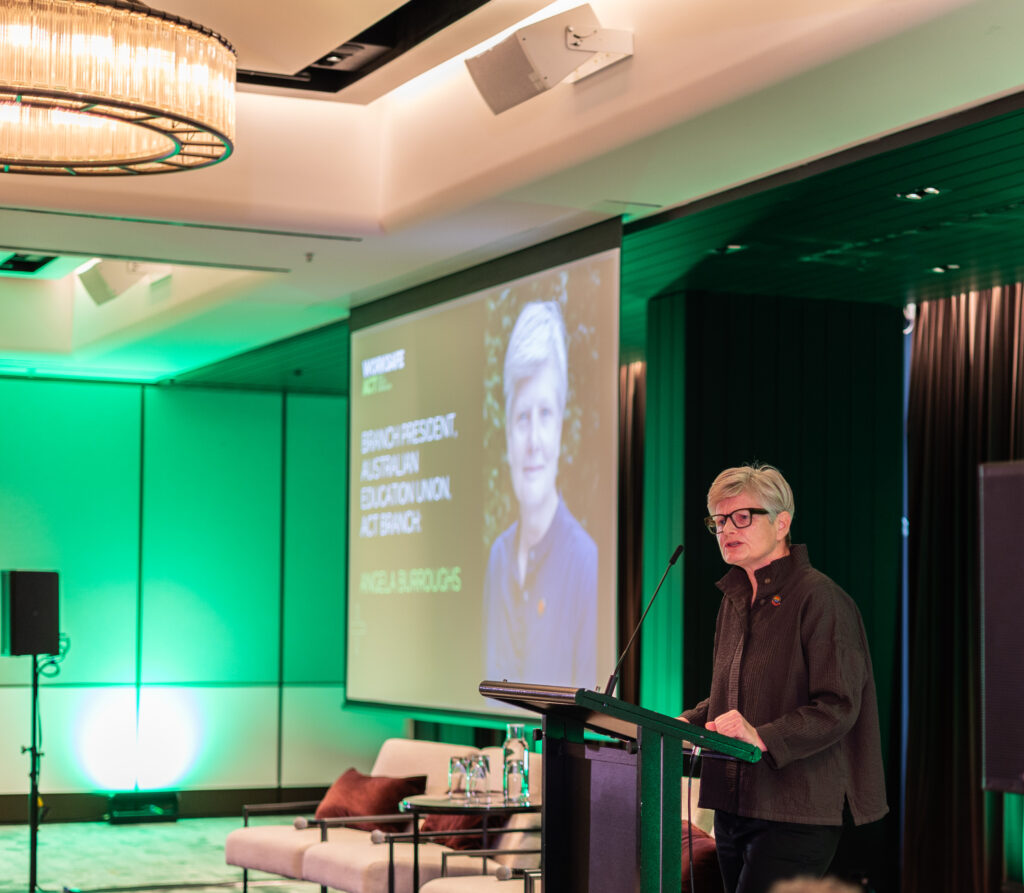
Truth telling
I’ve chosen to frame my presentation around the theme of truth telling, partly to honour the amazing Aboriginal educators I have had the benefit of being guided by over my career.
I chose truth telling as my frame of reference, because I’m convinced that a good dose of truth telling will help us to move forward in our thinking about safety in schools.
My truth telling approach has three distinct purposes.
1. Proper and honest preparation for the profession
Step one involves being honest with our new educators.
I was pretty confident I knew what I was getting into as a career change teacher. I was in my early 40s and became a primary school teacher after a 20 year stint working in universities.
The job I left prior to teaching was working for a vice-chancellor. I knew constant pressure. I knew responsibility, accountability, governance, compliance and a whole lot more.
I knew that ‘9-3 working hours’ and ‘always on holiday’ was complete rubbish. I was up for a demanding job. The pay cut was my choice.
What I didn’t know was that I was entering one of the most dangerous professions in the ACT.
We know it is high risk because education has the highest compensable injury rate in the ACTPS. Psychological injuries form about three quarters of compensation claims.
Would some truth telling have changed my decision to become a teacher? Probably not. But it could have made me better prepared.
With some honesty, we could potentially improve retention, and in the most extreme circumstances, save lives.
I recognise the challenge in what I’m saying. We don’t want to scare employees away. We all know we are in the midst of a teacher shortage crisis. But we must be honest with our employees. We must tell them about the hazards. We must, and most importantly, give them proper training, support and resources for mitigating these hazards.
Let’s not pretend that a work place injury won’t happen to them or one of their close colleagues. The statistics show the odds are stacked against them.
In addition to the worker’s compensation figures, the work of our union office confirms this. We deal with about 1000 calls a year for help.
This leads the second aspect of truth telling.
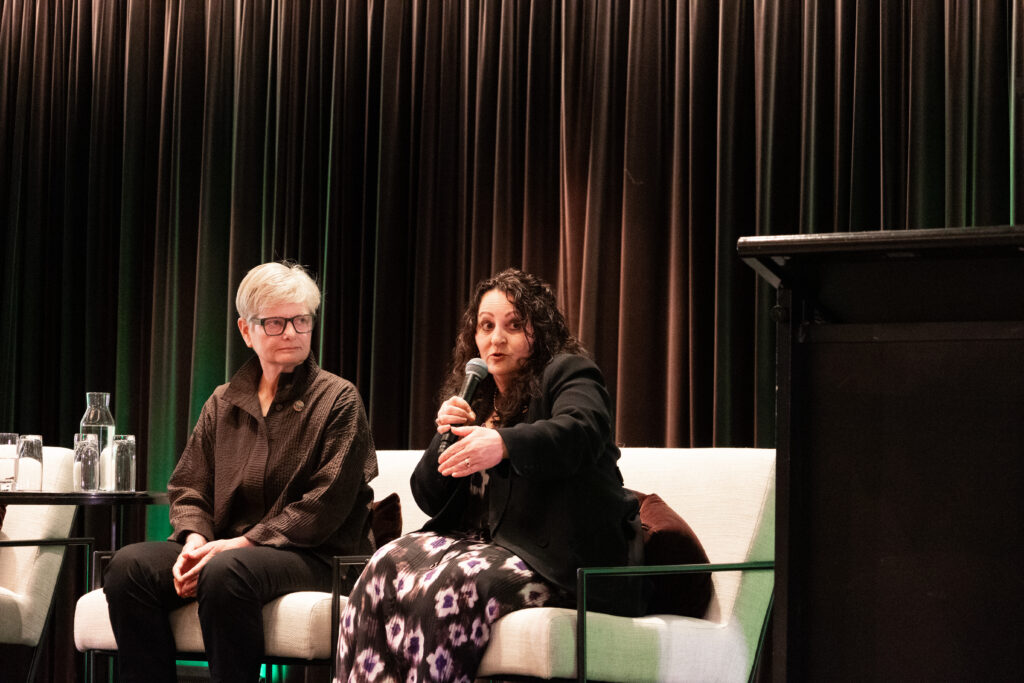
L-R: Angela Burroughs and Work Safety Commissioner Jacqui Agius
2. We must continue to pursue cultural change to eradicate the blame game
For a long time there was a culture of acceptance of workplace violence and psychosocial risk in education. If you couldn’t hack it, you just weren’t a good teacher. The kids come first, so just find a way to get on with it.
Principals and other school leaders felt this too. If you couldn’t suck up parental or community abuse, or build the resilience of your staff, you weren’t a good leader.
Sustained efforts of the AEU and WorkSafe have changed this. Our members know that occupational violence is not ok, and increasingly they speak up about psychosocial risk.
We work with the Education Directorate and with our principal and school leader members to increase our system’s capacity to identify hazards, and eliminate or minimise risk.
But here’s the reality check. We have been on this journey for numerous years now but the number of calls for help each year to our union office continue to increase.
Here’s one example that reveals the extent to which our work is unfinished. Last year we heard from one school that they have a staff ‘crying room’. If that’s not bad enough, we also heard that management asked for the crying room sign to be removed because it was a bad look.
Public image over the welfare of staff. I’m not making this up – it’s truth telling.
It reveals the truth that there’s plenty of work still to be done.
We have made enormous strides in improving our understanding of workplace violence and psychosocial risk, but we need to remain ever vigilant.
This leads me to my final observation and our social responsibility.
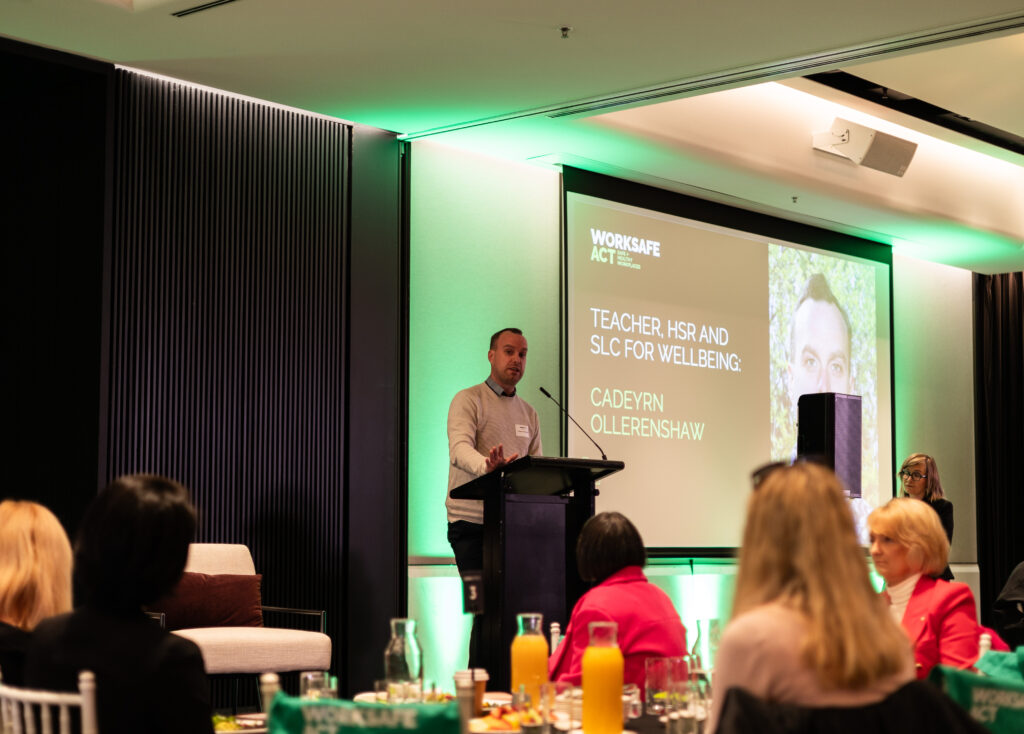
AEU member, teacher, SLC and HSR Cadeyrn Ollerenshaw
3. It’s our responsibility
If we deny or gloss over the abuse, violence or injury education workers suffer, we are condoning the behaviour and tacitly educating future generations of students about the acceptability of certain behaviours. That it is ok to hit or verbally abuse another person. This is particularly troubling given the feminised nature of our workforce.
When I lost a great teaching partner and my best friend to a psychosocial injury, doing something about safety at school became very personal for me. I’m proud of what our union started.
I’m grateful to the committed staff in the Education Directorate for coming on this journey with us.
It’s is through this collaboration that in a relatively short time, our thinking about safety in schools has changed.
However, there is room to be bolder. I think we are still held back by concerns over public perceptions.
In my view, there is considerable scope for truth telling and I think we would all be the better for it.
I thank the Commissioner and staff at Worksafe ACT for organising this breakfast and in so doing opening up a conversation about truth telling.
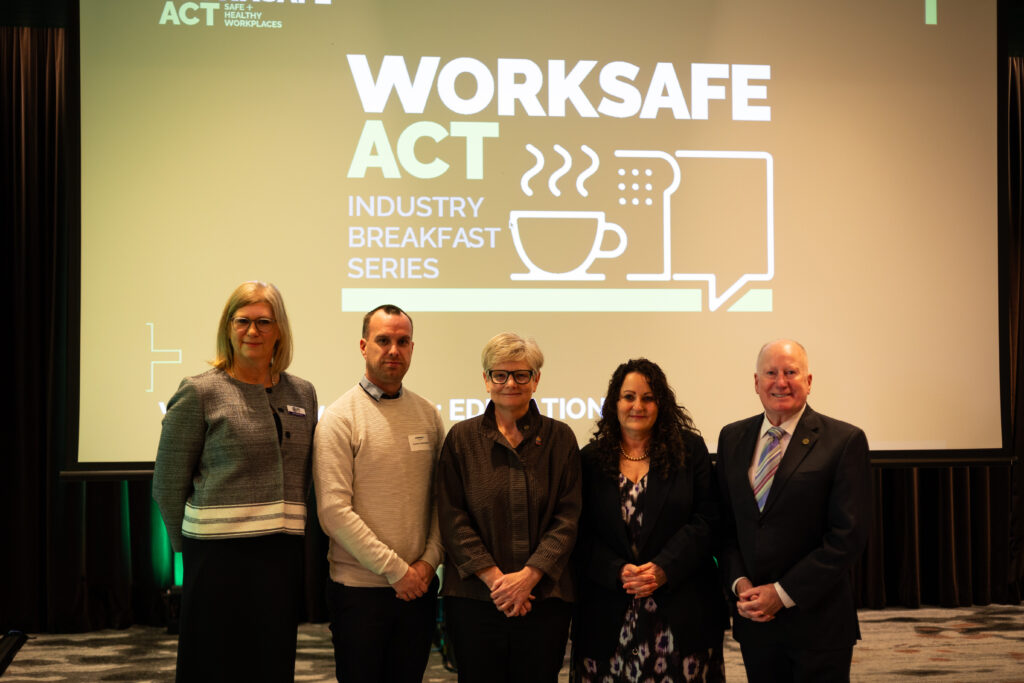
Above L-R: Safe at School EGM Kate McMahon, HSR and AEU member Cadeyrn Ollerenshaw, AEU Branch President Angela Burroughs, Work Safety Commissioner Jacqui Agius, and Minister for Industrial Relations and Workplace Safety Mick Gentleman.